
The Best Daily Exercises for Mobility and Flexibility in Older Adults
Our bodies change as we age. Our joints stiffen, we lose bone density and flexibility, and even our vocal cords tend to thin out, stiffen and shrink, resulting in a breathier, quieter voice.
While it might be tempting to stay inside watching your favorite TV show, especially during the colder months, it’s crucial for everyone to maintain their mobility and flexibility, especially as they age. When you were 18 you might have been able to lounge around for a week and then jump out of bed to run 5 miles without breaking a sweat, but those days are long gone. This doesn’t mean that you aren’t able to have a vibrant, active life (or run 5 miles – although you might sweat a bit more at this point in your life), it just means that you need to put more effort into consistency, as it’s easy to loss muscle mass and flexibility as you age, and takes a lot longer to build up strength or recover from an injury when you are more advanced in years. Of course, in an ideal world everyone would stretch and exercise every day, but when you’re younger you don’t really notice negative impacts from not doing so…that’s not the case when you’re older.
Thankfully, regular exercise and stretching can make a major difference for older adults. Many people who remain active are still able to do challenging movements, run errands, pick up their grandkids, garden, have enjoyable sex and live independent lives. All of which are pretty good reasons to want to establish a healthy stretching and exercise routine.
And, in addition to all the great benefits that staying active can bring you, it’s also very important in terms of helping you to minimize the risk of developing type 2 diabetes, stroke, heart conditions, obesity and a variety of other health conditions, as outlined on Medline Plus. Of course, it’s worth pointing out that even if you exercise every day, sleep well and eat a healthy diet, you could still end up with a number of health conditions. However, maintaining healthy habits can significantly reduce your risk, and can also give you a better chance of handling your health conditions should you develop them.
Before we get into specific mobility and flexibility exercises that you should do, let’s talk a little bit about how much exercise you should get, and a few ideas for what kind of activities you might want to get involved in.
Mayo Clinic tells us that we should aim to get a minimum of 150 minutes of moderate activity a week, 75 minutes of vigorous activity or a mix of both. And that recommendation is a minimum. Unless you’re pushing yourself towards dangerous levels of exertion, there’s usually not a strict upper limit on how much activity you should get.
You should aim to spread out your physical activity throughout the week, and mix up the kind of exercise you do. Aerobic exercise helps to improve your cardiovascular health, improving your circulation and lowering blood pressure and cholesterol levels. Resistance training is important for building muscle and bone density, improving balance and increasing your metabolism. All forms of exercise can help boost immune health as well as your mental health.
In terms of what constitutes moderate versus vigorous activity? First of all, let’s get into what differences you will experience between them.
With moderate activity you can expect that your heart rate will rise and you may break a sweat, but you should still be able to hold a conversation without much effort.
Vigorous activity will probably push your heart rate even higher, you’ll be breathing hard, and you’ll probably find it hard to say more than a word or two without stopping to catch your breath.
As for what kind of activity you should do? Well, that really depends on…you. Everybody has a different fitness background and what might be easy for you might be hard for another person. For example, walking might be considered a moderate activity to some, but to others, who spend a lot of time at home and are not often active, it might be much more difficult and be labeled a vigorous activity. And if you regularly work out then your fitness will improve, so if walking was initially difficult, it may now feel moderate to you.
 So, with that in mind, let’s look at some forms of exercise that are often considered moderate, of course any of them could be vigorous depending on the person or the situation (a spin class is almost certainly vigorous, while a relaxing cycle through town probably isn’t):
- Walking
- Cycling
- Water aerobics
- Pickleball
- Gardening
- Yoga
And in terms of vigorous activity you might be looking at:
- Swimming
- Jogging
- Dance
When thinking about what kind of exercise to incorporate into your lifestyle one of the most important things to consider is whether or not you enjoy that activity. Enjoyment makes it more likely that you will want to continue doing that activity, so experiment until you find something that you love. Socialization can also be a good motivator, so invite friends and family to join you for a walk or to go to a Zumba class.
Now that we’ve talked about the importance of exercise, let’s focus in on what mobility and flexibility means, and the exercises you can incorporate into your daily routine to keep your body healthy.
Royal City Physio goes into detail with both definitions, but we’ll offer up a shortened version.
Flexibility is the ability of a muscle to stretch and lengthen. Think of an elastic band, when it’s new it’s soft and flexible, but over time, if left unattended to, it can grow stiff and snap if stretched. Humans aren’t elastic bands, but if we don’t stretch our muscles they can become stiff and immobile.
Mobility is when a joint is able to go through its entire range of motion. Think of bending your arm or spinning it in circles. Although mobility requires healthy joints, flexibility also plays a key part as well, so you can’t really have one without the other.
Many forms of activity can support flexibility and mobility, such as yoga or pilates. But, if you live a sedentary lifestyle, or are doing a lot of vigorous activity without proper rest and stretching, then you might limit the ability of your muscles and joints to relax and operate to their fullest extent. This can cause problems such as pain or difficulty doing simple tasks like getting up and down from a seated position or bending over to pick something up. So, let’s look at some exercises you can build into your routine to increase your flexibility and mobility. You might do some of these exercises before and after a workout, or put aside some time during the day, perhaps with some meditation and journaling, to give yourself some well deserved “me time.” Let’s start with flexibility exercises.
When stretching only hold the pose to the point where you feel a slight pull in the targeted area. Hold each stretch for around 30 seconds, and don’t continue if you feel pain. There are generally always alternative stretches you can do. If you are constantly feeling pain then you should visit your doctor or a physiotherapist.
Hip Flexor and Thigh
This stretch targets your hip flexor, which is where your leg meets your torso, as well as your thigh – the upper part of your leg.
- Stand close to a wall or a sturdy object like a table you can use for support if needed.
- Try to stand straight.
- Lift the heel of your right foot and continue lifting as though trying to touch your own bum.
- Grab that foot with your right hand and hold.
- Once you’ve held the stretch for 30 seconds, switch to the other side.
Calf Stretch
The calf is the area in the back of your lower leg. It can often feel tight from exercise or simply being on your feet a lot. There are a few different ways to perform a calf stretch. Try them out to see what works best for you.
Version 1:
- Stand close to a wall and place both hands against it as though trying to push through it.
- Gently bend your right knee while moving your left leg straight out behind you.
- You should feel the stretch in your left leg. You can adjust the stretch with how far you are from the wall, how bent your right leg is, or how far back you place your left leg.
- Switch positions to stretch your other leg.
Version 1:
- Stand close to a wall, touching it for support if needed.
- Place the toes of your right leg against the wall, while keeping your heel on the ground. Your foot will create an angle with the wall. You can adjust how much of a stretch you get with the angle.
- Complete on the other side.
You can also purchase calf stretchers which are slanted devices that you stand on. Although it’s always a good idea to consult a medical professional before investing in anything to make sure it’s the right choice for you.
Shoulder Stretch
- Hold out your right arm straight in front of you, then cross it against your chest.
- Bend your left arm and cradle your right arm into the crease of your elbow.
- Use your left arm to gently pull your right arm closer to your chest.
- Complete on the other side.
There are many other stretches for areas such as the hamstrings. Mayo Clinic offers some great advice. Of course you should always stretch out any areas that feel stiff, but it’s good to stretch every area of your body, regardless of whether you feel you need to or not. Think of it as taking your body through a regular maintenance check like you would your car. Everything might be in good working order, but it’s important to check through the mechanics and change the oil to make sure it stays that way.
Now, let’s move on to some mobility exercises.
Shoulder Circles
This might seem fairly self explanatory, but let’s go through it just in case.
- Gently raise your shoulders as though shrugging, let them drop to the back, move them to the front and then back up again – you’ve just done a circle.
- Go in one direction for 30 seconds and then reverse direction.
Arm Circles
- This is the same sort of idea as the shoulder circles but this time you hold your arms straight out to the side, as though making a giant T with your body.
- From there start tracing small circles in the air with your hands, allowing your arms to follow that movement.
- Once 30 seconds have passed you can switch direction.
- This one can be tough so be sure to take a break if you need to during this or any other exercise.
Leg Lifts
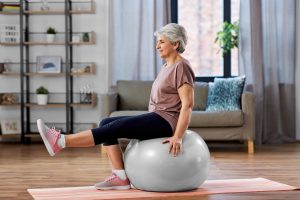
- Sit in a comfortable seat position with a straight back. Your feet should comfortably fit flat on the ground.
- Lift your right foot off the ground until your right leg is straight out in front of you. Don’t worry if your leg can’t completely straighten or get too high. Only straighten or lift to a place that’s manageable for you.
- Hold in the left position for around 5 seconds, or less if that feels too long. Repeat on the other side. You should complete the exercise around 6 times on each side.
Ankle Rolls
This exercise is similar to the shoulder or arm circles, except you’ll be moving your ankle in circles for this exercise. You can do this by:
- From a seated position in a chair, lift one foot slightly off the ground and gently roll in circles, pausing for support if needed. Be sure to switch directions.
- Switch to the other foot.
Or, if lifting the foot off the ground isn’t accessible for you, you can:
- Lie down on a yoga mat and place a rolled blanket or towel just above your ankles. You can also lie on a bed with your feet hanging off the end.
- From there you should be able to comfortably move your ankles in circles from a lying down position.
For more flexibility and mobility exercises check out this post by Health Central.
One final note is to remember to never push through an exercise that feels painful. Pain is our body’s way of telling us that something is wrong and we should stop. An exercise might feel challenging and you might feel tender, but if something is painful you should switch to a different exercise and bring up the issue to your doctor or physiotherapist at your next appointment so they can diagnose the issue and give you an alternative exercise to do. Movement is important, but if you’re pushing through pain then there’s a good chance you will injure yourself, which will make it much more difficult, if not impossible to keep up with your exercise, flexibility and mobility goals.
Stay safe, have fun, and here’s to feeling healthy and amazing!
Spring Into Health: 7 Habits for a Stronger, Happier Life
As the weather warms, spring brings a sense of rebirth and rejuvenation—both for the Earth, and for the many creatures living on it. From the animals emerging from hibernation to the flowers and trees putting out fresh growth, it’s a truly beautiful season!
For many, this season can also help to bring back some of the energy that may have been dampened by the winter months. With the sun coming out earlier in the morning, it’s likely much easier to get up and out of bed each day, and because of this, the rest of the day might just feel a little bit brighter, too. This is part of what makes spring such a transformative season—it gives you that extra little push to change. The trick is to know where to channel this newfound energy, in order to create sustainable and lasting positive change in your life. Whether that means picking up a new hobby or cleaning out some clutter, there are endless ways to put that “spring” back in your step.
The Secret to Making Lasting Habits
But what exactly makes a positive change sustainable? How can you design a habit to make it stick? To answer this, we can take a look at the science behind habit formation.
Perhaps unsurprisingly, the first step in making lasting change is to keep your expectations realistic. While many goals can seem doable when your motivation is high, it’s the realistic, small goals that you’ll keep up with in your everyday life. Alongside keeping things small, it’s important to be specific about your goals; in the world of habit-building, the more specific, the better. According to a guide published by the University of Utah, one way to do this is by using SMART goals. The acronym “SMART” stands for specific, measurable, attainable, relevant, and time-bound, and is a framework for you to build your habits around. As mentioned in the guide, you can start turning goals from simple to SMART by asking yourself a series of questions—such as “how can I track my progress in this goal?” and “what capabilities and resources might I need to get before I can succeed in this goal?”—in order to hone in on the best path forward.
While SMART goals work for a variety of purposes, there are also some tips specific to habit building. One such tip is to habit stack; in other words, to add a new hobby onto an existing one. In an article by the British Journal of General Practice, the authors noted that lasting habits tended to have associated contextual triggers. One example that they gave was the action of putting on your seatbelt. In that case, the contextual cue (or trigger) is the act of getting into your car. After you’ve gotten into your car and put on your seatbelt straight away enough times, it becomes second nature—it becomes a habit. The same thinking can be applied to habits that you’re trying to build. By joining a new habit with an old one—for example, flossing your teeth after brushing them—you’ll have the context cue already established, and won’t be starting from scratch.
1. Exercise
First on our list of potential healthy habits is exercise. Getting consistent exercise is fantastic for people of all ages, but is particularly important as an older adult. With age comes an increased risk of health issues, injury, and mobility issues, making it crucial to stay in good physical health. Luckily, as per the CDC, exercise can have many positive effects on your body; from reducing the risks of heart attacks, strokes, and diabetes, to lowering blood pressure and improving sleep quality, there are plenty of rewards to be reaped. In addition, exercise can also help to improve your mental health. In one NCBI review, researchers concluded that physical activity “holds the promise of better mental health outcomes for older adults,” and is a relatively safe, inexpensive, and accessible activity with many associated benefits. Therefore, getting in the habit of exercising each day is a great way to kickstart your health this year.
How you do this will vary based on your mobility level and lifestyle. Are you an active person? Do you have any health issues that prevent you from doing certain exercises? These kinds of questions are important to consider when trying to establish a habit of exercise. For example, as someone with a high degree of mobility, you might try joining a dance class, taking a pilates lesson, or joining a local gym. On the other hand, if you struggle with chronic pain, or simply want to start out slow, you might choose to simply take a walk each morning, or do a bit of light stretching each night before bed. As always, your goal with habit building is to find something sustainable and enjoyable for you.
2. Build a Healthy Diet
Another excellent habit to get into is eating a healthy, well balanced diet. This is a bit trickier to navigate than simply picking up a new hobby, as you need to make small, intentional changes over time. Doing a complete overhaul of your diet isn’t sustainable or realistic—before too long, you’ll usually find yourself slipping back into your old ways of eating, which can then cause you to feel guilty and ashamed. So, instead of doing a complete 180 and changing all of your eating habits, start by identifying a few small, key areas that you can improve upon.
If you struggle to eat enough fruits and vegetables, try getting into the habit of eating some with at least one of your meals each day. This might look like an apple or orange with breakfast, some peas or broccoli on the side for lunch, or mixing some extra vegetables into a stew or soup for dinner. Incorporate them in as many ways as you can! Meal prepping, such as making a bulk batch of your favourite salad to store in the fridge, can make healthy snacking easier as well.
For those looking to up their protein intake instead—as protein is one of the most important nutrients for older adults—you can do a similar thing but with varied protein sources. If you’ve grown bored of eating chicken, pork, or beef, you can try to get in the habit of incorporating an alternative protein source into one meal a week. Things like beans, tofu, and fish are all great options if you’re looking for an extra protein boost.
3. Try Gardening
What better way to start eating healthier than by growing your own fruits and veggies? If a healthier diet is a goal for you, you may be surprised by how much having a garden can help. With a good harvest season, you’ll find your pantry practically overflowing with fresh produce, all from your backyard. Having this constant stream of fresh food coming into your kitchen will naturally increase their presence in your diet. And, if you have extras, you’ll be able to share this joy with friends, family, and neighbours by gifting some of your harvest to them.
Gardening has many other benefits too! For example, the simple movements that come with tending to your garden—such as raking, lifting pots, and transplanting delicate seedlings—provide an opportunity to exercise not just your large muscles, but also the small muscles used in fine motor control. As these motor skills naturally degrade with age, it’s important to find hobbies and habits that help to maintain them.
To get in the habit of gardening, you might start out with a small planter box by a kitchen windowsill to grow some common herbs, like parsley, chives, and thyme. From there, you can transition to growing larger plants like cherry tomatoes, peppers, and salad greens, which can all be planted in pots if you’re tight on space. With a little bit of time, luck, and effort, you’ll have a flourishing pantry right in your backyard!
4. Learn New Things
 When was the last time you sat down and decided to learn something out of your comfort zone? If your answer is something along the lines of “it’s been a while…” then you’re not alone! A common misconception is that older adults “can’t learn new skills” but this is wholly untrue; in fact, learning new things is one of the best things you can do in your golden years.
In 2023, researchers at Scientific American performed an experiment to see whether the cognitive decline seen in older adults could be prevented or improved by learning new things. They created a structured program which mimicked a college student’s schedule, with three weekly classes of 2 hours each. They found that their participants, who ranged from ages 58 to 86, saw marked improvements in their memory and attention scores. After 3 months, their scores rivaled those of people 30 years younger—after a year of learning, their scores were similar to those of people 50 years younger! The article’s conclusion was that, while further research is required, these results show promising signs that cognitive decline can be combated with continued learning in older adults.
While this study focused on a fairly rigid, structured learning environment, the article clearly notes that “(the researchers) do not think that formal education is the only or most important way to support learning,” but rather that it is one of many ways that you can boost your cognitive health. Taking a language course, practicing new techniques on an instrument, or trying out a new hobby are all excellent habits to get into. The goal is to learn, and to enjoy learning, so go for something that interests you!
5. Get Social
Humans are social creatures, and have been since the time of our very first ancestors—we are practically hardwired for social interaction. In a recent article on human evolution, several pieces of evidence were compiled to support this claim. Among this evidence was research done on brain structure, which has shown that there are two distinct neural networks for social and non-social tasks, with social tasks being dealt with through the social brain network, and non-social tasks with the other. The interesting thing is that once a non-social task is completed, our brains will naturally turn our social network back on. In other words, we naturally (almost reflexively) revert back to social thinking.
Because of how attuned we are to socializing, it comes as no surprise that a certain degree of socializing is crucial for a good quality of life. Unfortunately, as we age, opportunities to socialize become fewer; friends move away, life gets busier, and sadly, some loved ones pass away. Because of this, older adults are especially vulnerable to loneliness, social isolation, and related mental health conditions like depression. To combat this, you should do your best to get in the habit of seeing friends and family on a regular basis. This may take the form of attending exercise classes together, scheduling weekly coffee sessions, taking walks together, or volunteering at the same organization. Whatever it may be, do your best to keep things regular and repetitive—instead of hanging out once for a special occasion, try to make recurring plans to see each other every month. Consistency is key for habit building, after all.
6. Meditate
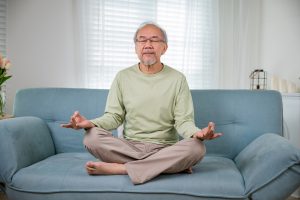 When talking about healthy habits, one that pops up all over the place is meditation. This is for good reason too; meditating is one of the easiest, most accessible, and most impactful habits that you can cultivate. From physical effects—like lowered blood pressure, improved cholesterol levels, and reduced inflammation—to benefits for many mental health conditions like anxiety and depression, consistent meditation is wonderful for your health.
There are also many different ways to meditate, so you can find a method that works well for you. These include breath-focused meditation, body scans, and even active forms of mindfulness like mindful walks, yoga, and tai chi. It’s a common misconception that meditation has to be done with the eyes closed, sitting cross legged, and without any guide apart from your breath; this method may work for some, but it can also be discouraging if you aren’t able to sit for long periods of time, or find yourself easily distracted when sitting in silence. Just as with any other habit, it’s important to find something that fits your needs—if you enjoy it, you’re far more likely to stick with it.
7. Organize and Declutter
Nothing says “spring” like a bit of spring cleaning! While it’s often tempting to try and get everything cleaned in one go, breaking your cleaning up into small, habitual chunks will give you better results that last longer.
While a deep clean takes a lot of effort (to the point where you may lose motivation before you’ve cleaned everything you planned to) taking 10 minutes out of every day to clean an area of your house can help to keep things organized and clutter-free in a more practical way. As you continue this habit, you may start to see patterns in which areas grow cluttered quickly—for example, your dining table may be the place where your day-to-day items accumulate—which can then help you to create strategies to manage this clutter. If your bathroom always ends up untidy, you might consider buying a shower caddy to store items. Similarly, if you have a drawer that constantly fills up with junk, you could invest in a drawer organizer. By staying consistent and noticing areas for improvement, you’ll be able to start decluttering like a pro in no time.
Final Remarks
As we close out this article, take some time now to think of what habits you would like to implement into your life. From there, refine them with the SMART method, and think about what existing habits you can link them to. Perhaps you’ll start meditating Each night after showering, or start each day with a walk around the block. Whatever this may look like for you, remember: the goal is consistency, not perfection. Take things at your own pace, don’t be afraid of setbacks, and have fun! The world of habit building is your oyster.
The Top 10 Benefits of Gardening for Older Adults This Spring
With warmer weather just around the corner, now is a perfect time to start laying the groundwork for this year’s gardening season. Even if you’ve never gardened before, this hobby is one that you’ll thank yourself for starting, as—although it may not seem like it at first glance—gardening has tons of benefits, especially for older adults.
1. Great Way to Exercise
Exercise may not often be associated with gardening, but that’s not to say that this hobby can’t get you up and moving! You’re far more likely to get up and outside when you have a garden, as many garden plants require frequent, consistent attention.
As an older adult, it is recommended that you get 150 minutes of moderate exercise each week. While this number can seem large, it’s generally pretty manageable if broken down into small amounts of time across the whole week. For example, if you enjoy walking and gardening, this might look like taking 15 minute walks on weekdays, and longer 30 minute walks on weekends. The goal here isn’t to be perfect, but rather to develop and maintain a routine that works for you; with consistent exercise, you’ll be able to decrease your risks of heart attacks, strokes, diabetes, and even some forms of cancer. Exercise can also improve your sleep quality and blood pressure.
Luckily, gardening requires a wide range of movements—including raking, weeding, digging, moving pots, carrying watering cans, and spreading mulch—which can all count towards your exercise goals. These movements may not seem that labour-intensive, but they are great for increasing both your strength and endurance. If the majority of your time is spent sitting or kneeling, you’ll probably naturally stretch out after you’ve stood up—in this way, gardening can also promote better flexibility, as you’re more likely to stretch your muscles than you would be sitting on your couch.
2. Improves Dexterity and Coordination
Just as gardening is great exercise for your big muscles, it’s also great for your smaller muscles—namely, the ones involved in fine motor control. As you age, these fine motor skills begin to deteriorate. According to one study published to the National Library of Medicine, older age has been found to be “related to a worse performance on all measures of fine motor skill” especially in those over the age of 75. Since these motor skills are crucial for many everyday tasks—such as tying shoes, buttoning shirts, using cutlery, and writing—it’s important to maintain them as best as possible.
To keep your fine motor skills intact, it’s recommended that you use them as often as possible. In gardening terms, this might look like picking up small seeds, transplanting delicate plants like seedlings and flowers, using scissors, and tying twine. You’ll also be using fine motor skills when you write labels, draw diagrams, or paint detailed pictures; because of this, taking some extra time to beautify your garden or draw a “garden map” is a fantastic idea. It’ll let you unleash some creative energy too!
3. Helps You Get Some Sun
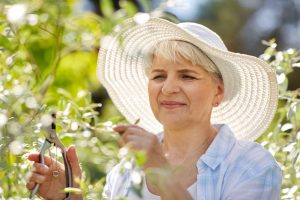 When gardening outdoors, you’ll have plenty of opportunities to soak up some sunshine. This is great for two main reasons: for vitamin D production, and for the regulation of your circadian rhythm.
As a vitamin that isn’t abundantly found in food, vitamin D can be a bit tricky to get enough of, especially in the colder months. While it may be tempting to just take supplements, they can have dangerous side effects if not dosed correctly. According to the American Academy of Family Physicians (AAFP), high doses of vitamin D supplements have been shown to increase risks of falls in older adults; even at low doses, it is recommended that unless you have a clinically diagnosed vitamin D deficiency, you avoid taking supplements. By increasing your vitamin levels through sunlight exposure, you’ll be able to naturally boost your bone and immune health without needing a prescription.
Getting more sunlight is also beneficial for your overall energy levels, as it helps to regulate your circadian cycle. Also known as your internal clock, this cycle is what dictates when you sleep and wake up—as it’s heavily influenced by your environment’s light level, it usually falls in line with the Earth’s day and night cycle. However, when you aren’t exposed to light at the right times, this natural rhythm can become dysregulated, leading to uncomfortable symptoms like fatigue and insomnia. By getting outdoors and exposing yourself to the sun’s rays during the day, you’re helping to keep your internal clock ticking at the right rate.
4. Proven to Boost Mental Health
In recent years, there have been many studies that investigate the link between greenspace and mental health. In 2018, an article published to the National Library of Medicine gathered evidence of the positive effects of gardening. These benefits included physical effects ranging from lowered blood pressure to decreased risks of post-surgical complications, as well as several psychological benefits. Several of the studies mentioned in the article found that exposure to greenspace—including walks in nature and gardening—was associated with decreased risks of depression, anxiety, and general stress.
While some of these benefits may largely be due to the increased social interaction and exercise that comes with getting outdoors, it’s still a definite, scientifically proven positive. In fact, because gardening has so many associated mental health benefits, it’s actually being prescribed by doctors in the UK as a means to improve patients’ overall wellbeing.
5. Benefits Cognitive Health
With so many physical and mental benefits, it’s likely no surprise that gardening has also been linked to improved cognitive health. Cognitive health conditions such as dementia and Alzheimer’s disease become increasingly common as you age—and, since dementia currently has no known cure, it is crucial to do everything you can to prevent it for as long as possible.
Though there is still no definitive evidence that gardening can single handedly prevent dementia, there are some very promising signs. This is largely thought to be due to gardening’s social and physical benefits, since frequent socialization and exercise have been linked to decreased dementia risks. However, there may be something about gardening, being out in nature, and enjoying the sun that helps to combat cognitive decline, too! The process of learning new things has also been proven to improve cognition, which further supports the benefits of gardening.
Even for those already struggling with dementia, gardening can be a fantastic and therapeutic hobby. In a 2021 review of research, it was found that gardening has many clear, positive effects on people with dementia. These benefits included decreased agitation, lowered risks of falling, and marked improvements in mood, depression, and stress. Dementia patients who gardened also required less medication, and had better cognition scores.
6. Promotes a Healthier Diet
By growing your own food, you’ll naturally start to eat more fresh vegetables and fruits. As your garden produces crops, you’ll be able to take them straight from your garden onto your plate—not only is this incredibly satisfying and rewarding, it’s also great for your health.
In a 2023 study, a team of researchers investigated the effects of community gardening programs on the diets of gardeners. The study concluded that during the growing season, people who gardened ate 60 ~ 70% more vegetables than their baseline, and were more likely to eat seasonally—in other words, they ate more foods that were in season. Since diets high in seasonal fruits and vegetables are generally more nutritious, you’ll be getting more out of each meal, particularly if you grow your own food in nutrient-rich soil. And, as an added bonus, homegrown foods generally taste better, as you’ll be eating them fresh off the plant!
Gardening can also bring some excitement to your kitchen; depending on your crops, you might try experimenting with some new recipes, or preserving them through pickling and canning. Just be sure to do your research, as improper canning can cause nasty problems like botulism.
7. Grows Your Community
Growing a garden can also help you to grow your social community. This can happen both directly through gardening, or indirectly through the changes that gardening brings to your lifestyle.
For example, if your garden happens to have an unexpectedly abundant harvest, you may find yourself with more produce than you can use up on your own. While there are many things you can do—like preserving or composting extra fruits and veggies—this can provide a great opportunity to connect with your friends, family members, and neighbours. Sharing abundance is a low-cost, low effort way to show a bit of extra care to those around you. Even if you don’t know your neighbours that well, sharing your harvest is an excellent conversation starter; you might even end up making a fellow gardening friend!
Another great area for socialization is to join community gardens and gardening clubs. Depending on your area, a quick search on Google for local community gardens should turn up a handful of suggestions. If planting in a plot is a bit intimidating, you’ll also usually be able to simply join as a volunteer, which can help you to grow both your community and your confidence in gardening. Similarly, gardening societies and clubs can help you to gain new friends alongside a wealth of gardening information, tips, and anecdotes.
8. Supports Your Environment
If you’re looking to do your part to combat climate change, or hoping to revitalize your local environment, gardening is an amazing way to do it. By selecting plants that are native to your area and / or plants that are easy for bees and other pollinators to harvest from, you’ll be able to revitalize your little corner of the Earth.
According to the USDA’s Natural Resources Conservation Service, plants such as milkweed, aster, goldenrod, sunflowers, and black-eyed susans are all great options for your local pollinators. By doing a little research into which flowers are native to your area, you can also help to keep invasive exotic species at bay, protecting your area’s natural biodiversity.
And, as the climate continues to change, every little effort counts—no matter how small it may seem. Even though planting a few shrubs won’t be enough to rid the world of climate change, making the choice to swap from a paved front yard to a grassy one can make a big difference in your own life. Since garden beds can soak up a lot more water than concrete and pavement can, this single change might just be what protects your home in the case of a flood or heavy rainfall. This is just one example, though—in the end, it’s all about trying to do your part to leave a better world for your kids and grandkids to inherit.
9. Gives You Purpose and Accomplishment
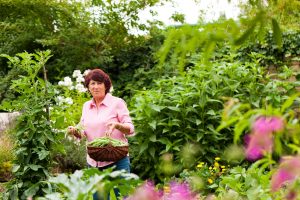 Due to the COVID-19 pandemic, you may have found yourself experiencing a good deal more boredom in recent years. Even without social isolation measures, older adults are more likely to experience boredom than younger adults. While this may seem harmless enough, the fact of the matter is that when you feel bored for long periods of time, you’re likely to begin feeling lost, sad, or like you don’t have a purpose anymore. In one study done during the pandemic, it was found that older adults often felt worried and uncertain when faced with their newfound lack of activities; however, the study also concluded that their participants were highly resilient, and were able to adapt to their new circumstances through finding new hobbies.
If you’ve been feeling similarly anxious or lost, growing your own garden can help to alleviate these feelings. Whether that be through growing beautiful flowers to improve your neighbourhood’s biodiversity, or through harvesting and sharing food crops, there is something for everyone. In fact, the simple act of caring for your plants and watching them flourish under your care can provide you with immense satisfaction, a strong sense of purpose, and motivation to keep pushing forward.
10. Creates a Peaceful Relaxation Area
After you’ve put in the time and effort, your garden might just become your new sanctuary. While gardening can be tough sometimes, it can also be immensely rewarding—both through the plants themselves, but also through your garden space itself.
When starting a garden, you’ve got a blank canvas in front of you that can be tailored to your needs and desires. If you’re a social butterfly, you could include a set of tables and chairs in a nice shady spot to create an outdoor area to entertain guests. If instead you’d prefer to keep things highly functional, you can fill your space with beds for vegetables; a great way to maximise a small garden’s productivity is to use vertical space through things like trellises and hanging or wall-mounted planters. And finally, if you’re more of an aesthetics-forward gardener, you can take your time designing each area to create a cohesive, beautiful garden.
Once your garden is set up to your liking, it’s time to bask in its glory! If you’ve already included a seating area, you might try coming out to your garden to read a book, eat a meal, or simply to observe the beauty of nature around you. For those of you who don’t have an area to sit in, you should consider either adding one or—if your garden is tight on space—finding other ways to relax in your garden. This could look like taking a slow walk around your garden in the morning to intentionally observe all of the little signs of growth, or sitting indoors near a window to admire its beauty from within your home. However you choose to go about it, taking the time to admire your work is a great way to build your sense of accomplishment, as well as relax after a hard day’s work.
There are many other benefits to starting your own garden, but our hope is that this has given you a hint into the vibrant and gratifying world of gardening. Now, what are you waiting for? Get out there and start planning your next great adventure!
Self-Love Secrets: 7 Simple Self-Care Tips for a Fulfilling February
February is often called the month of love, and for good reason! With Valentine’s Day right in the middle of it, many people place a lot of emphasis on their relationships—romantic and otherwise. This might mean buying your partner flowers, gifting your friends some chocolates, or giving strangers an extra smile as you walk past them. You might be on the receiving end of this too!
As nice as this extra outpouring of love is, February can also be a hard month for many; and, as an older adult, you are unfortunately far more likely to feel negatively at this time of year. You may be experiencing heightened feelings of grief and loss, or grappling with the fading of treasured past memories—you might also simply be feeling the pressure of wanting to do lots of good deeds for your loved ones, but not having as much energy as you used to.
Whatever you may be feeling, it is important to recognize that these emotions are perfectly natural, and are an expected part of the aging process. However, that doesn’t mean that things have to stay this way! By showing yourself some extra love this month, you’ll be able to better show your love to others—and you can do this by incorporating some self-care into your lifestyle.
What is Self-Care?
When you hear the words “self love” or “self care,” your mind likely goes straight to massages, spa days, and blissful vacations. However, there is actually a lot more to self-care than just these indulgences. Although massages and beachy vacations are definitely wonderful, they aren’t the only ways to show yourself some love!
In fact, self-care is mainly about improving your overall lifestyle by making the necessary changes—even if they are initially uncomfortable. It’s about prioritizing yourself, taking the time and putting in the effort to make yourself feel better. This could mean working towards feeling better physically, mentally, emotionally, socially, spiritually, or a combination of all of the above. Most people do a fair amount of self-care without really thinking about it; reading a good book, going for a walk, and eating your favourite meal are all great examples. Self-care can also be personalized to your lifestyle—everybody is unique, and so self-care activities will be varied from person to person. What matters is that the activities make you feel good, especially in the long term!
The rest of this article will detail some simple self-care activities. Whether you already have some go-to activities, or are looking to start doing self-care for the first time, our hope is that you find something that suits you, your needs, and your lifestyle!
1. Try New Things
One of the best ways to improve your quality of life is by continually trying new things. Not only does it help to keep things fresh and exciting, but it can also improve your cognitive health—something that becomes increasingly important with age. In one NCBI study, older adults who participated in active learning activities were found to have better memory function than their less active counterparts; some other studies have even linked active learning to a decreased risk of Alzheimer’s disease.
Because of these benefits, learning new skills is an excellent way to show yourself some love. Depending on your lifestyle, interests, and pre existing skill set, you might choose to do different things. Perhaps you’re interested in languages, and want to start dedicating a few minutes out of your day to learn a new language. Or maybe you’re an artist, and want to try out a medium outside of your comfort zone. Or maybe you just want to learn something completely new, like crocheting, poetry, photography, or coding. Whatever your activity of choice may be, it is important to choose something that truly challenges you. In the NCBI study, it was noted that “productive” activities, or activities which require active learning, are far more beneficial than “receptive” activities, which rely on existing skills and knowledge. By choosing to learn something truly novel, you’ll gain a lot more.
These activities also don’t have to be done alone! Often, having a structured learning environment—like a club, or lessons—can keep you motivated and on track to picking up these new skills. Some activities, like volunteering, also come with the added benefit of being able to help others, meaning that you’ll be able to show both yourself and others some extra love.
2. Embrace Nature
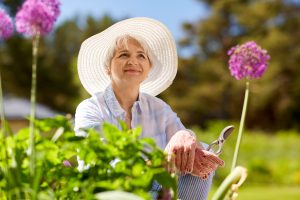 Though simple, the act of being out in nature can improve your quality of life by a pretty substantial amount. Studies have indicated that spending time with nature—including gardening, viewing nature through windows, and taking walks outdoors—is beneficial for both your physical and mental health. According to a 2018 review of research, exposure to greenspaces was linked to decreased stress, improved blood pressure and heart rate, and lowered risks for diabetes, heart attacks, strokes, and asthma, among other benefits. Outdoor activities like gardening and hiking also come with added physical benefits, including improved mobility, dexterity, and endurance.
Luckily, nature-related self-care activities are both abundant and, for the most part, easy to integrate into your day to day life. Embracing nature can be as simple as going outside for a walk every day, or spending some time outdoors at a local park. If you happen to have a bit of extra time to kill, you can also try going on longer hikes, or spending some time intentionally connecting with the nature around you. To do this, try to reflect on what you can notice through each of your senses, such as hearing birds singing, watching trees sway in the breeze, and smelling flowers and herbs. Alternatively, you can use the nature around you as a source of inspiration for creative hobbies. A little mundane patch of moss can become the fascinating focal point of a photograph, short film, drawing, painting, poem, or even a longer story. This is also a great chance to try out new hobbies, which—as mentioned above—are great for your mental health.
If you don’t have access to a lot of greenspace in your neighbourhood, you can embrace nature in your own home by keeping houseplants, or growing things in your garden. Even if you don’t have much of a green thumb, hardy houseplants like zz-plants, cacti, and succulents can make easy, low-maintenance additions to your home. Taking care of these plants by watering them, repotting them, and simply watching them grow can all serve as wonderful self-care activities.
3. Get Moving
According to the National Institute on Aging (NIA), being physically active has numerous benefits for older adults. These include increased energy, endurance, and strength, as well as improved balance and decreases in risks of falls, heart disease, diabetes, and other disorders. There is also lots of evidence that suggests that physical exercise has positive effects on cognitive health, from improved memory to decreased risks of Alzheimer’s disease.
As a general rule of thumb, it is recommended that older adults get at least 150 minutes of moderate physical activity per week. Because of this, working to incorporate physical activity into your lifestyle is a great way to show yourself some love.
If you are already a fairly active person, adding an extra bit of self-love into your exercise routine could look like taking more time to stretch, both before and after exercising, in order to keep yourself relaxed and pain-free. If you are not currently as active as you could / should be, your new self-care activities could include taking a walk, doing a few minutes of yoga, or attending an exercise class. As exercise can be easily adapted to your needs, finding a type of exercise that works for you is generally a pretty enjoyable process—just keep an open mind, and don’t be afraid to try things out until you find something that works for you, and you should be moving and grooving in no time! Some examples of exercises include aquatic fitness (aquafit), dance, pilates, weight and resistance training, yoga, tai chi, walking, hiking, swimming, and cycling, most of which can be adapted to suit your individual needs and abilities.
4. Expand Your Social Life
As an older adult, you are unfortunately more likely to struggle with social isolation and loneliness than other age brackets. As such, your social life is something that you should prioritize and aim to maintain. And, as per the NIA, having a well-established social life can also help to reduce the risks of cognitive decline—in one study, which had over 7,000 participants, it was noted that high degrees of social engagement are “associated with better cognitive health” in your golden years. Therefore, taking care of your social life is a great way to take care of yourself, too.
How you go about nourishing your social circle can vary. If you enjoy hanging out with pre existing friends, you can try allocating a set day each week or month—for example, the first Sunday of each month—to hang out together. This helps to take the stress out of planning, as you will always know that on that day, you’ll be meeting up with a certain friend. Do this with multiple friends, and pretty soon your social life will be flourishing! On the other hand, if you are interested in meeting new people, joining a local club or exercise class can put you in contact with like-minded people; this also combines the social benefits with the benefits of learning new things, in the case of hobby clubs, and exercise, in the case of exercise classes.
If you live in a remote area or small town without many activities, consider starting your own! Alternatively, you can also join online communities on platforms like Gransnet and Facebook, or simply call your friends and family via Zoom, Google Meet, or another calling platform.
Volunteering and other community service activities can also provide excellent ways to bulk up your social calendar, while simultaneously making you feel happier. According to Columbia University’s Irving Medical Center, showing generosity has many incredible benefits, from lowering blood pressure to decreasing stress levels. Performing acts of generosity for your community can, in turn, become acts of self-care and love!
5. Try Meditation
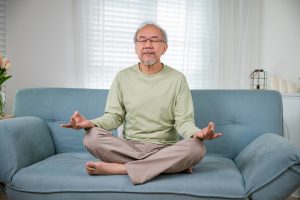 Aging can be a hard and at times scary experience. Practicing mindfulness through meditation is a fantastic self-care tool that allows you to learn to notice, accept, and let go of passing negative thoughts and sensations. While there are many benefits to be gained from meditation, the most note-worthy include lower stress levels, chronic pain alleviation, reduced inflammation, and benefits for mental health conditions like depression and anxiety.
Starting to meditate is actually quite simple! The most common form of meditation doesn’t require any fancy equipment, and simply involves closing your eyes and focusing on your breath, making this a very accessible form of self-care. As you focus on your breath, you will naturally begin to find yourself getting distracted—don’t worry, as this is actually the point. Meditation isn’t about becoming totally devoid of thoughts, but rather about learning to notice that you have become distracted, and gently returning yourself back to your focused state. By doing this over and over, you build a habit of noticing and releasing your distractions without judgement, a skill that is transferable to many other areas of life. For example, if you struggle with chronic pain, meditation can help to build resilience to pain through the process of noticing, feeling, and releasing the painful sensations. While this likely will not completely remove the pain, it can certainly help you to manage it.
If you want to pamper yourself a little bit more, you can try setting up a meditation area in your home. This can be as big or as small as you would like, and can incorporate any number of things, from meditation cushions, to incense, to affirmation cards and meaningful photographs. As an intentional act of self-care, try to take some time to truly make your space into one where you feel loved and at peace.
6. Fuel Yourself Mindfully
Beyond meditation, there are many other ways to practice mindfulness. One such way is by being mindful of what you fuel your body with, from your diet to your sleep schedule.
As a first step, consider any unhelpful vices you may currently have. Do you drink more than you should? Are you a smoker? Asking yourself these questions is likely uncomfortable, but it is a very important step; without confronting these issues, you won’t be able to work through them. If you know that something is detrimental to your health—physical, mental, or otherwise—then taking the initiative to change that for the better is a definitive act of self-love. It may be tough, but in the long run, these changes have the potential to dramatically improve your quality of life.
Alongside this, try making small, but intentional, changes to your diet and sleep schedule. This might look like eating one healthy meal a week, calculating how much water to drink each day, or setting up a bedtime routine to help you to unwind and sleep more soundly. As with everything else discussed in this article, how you go about implementing this will look different for everyone. For example, some people may enjoy meal planning, while others may appreciate a bit more spontaneity in their dietary choices. The trick here is to find strategies that make your life easier, or healthier, or better overall, and then stick with them!
7. Treat Yourself With Kindness
Last, but certainly not least, treating yourself with kindness and care is crucial for self-care—after all, it’s in the name! This means giving yourself grace when you fall short of your goals, and understanding that self-care is about the long-term just as much as the short-term. Setting healthy expectations and boundaries, both with yourself and with others, is key.
This can also mean having fun! Try to treat yourself like you would treat a loved one—self-love is all about expressing your love for yourself. While everything should be done in moderation, giving yourself treats like going to your favourite restaurant and going on a nice vacation shouldn’t feel like they’re off limits. Neither should doctor’s visits, or trips to a therapist. Take care of your health—you deserve it!
Staying Active at Any Age: Easy Exercises for Older Adults to Boost Health
No matter your age, exercise is important. As we grow older, this importance only increases—however, how often we exercise naturally declines with age. While you don’t need to be running marathons or going to the gym every day, maintaining a steady level of exercise is crucial for healthy aging.
According to the Center for Disease Control and Prevention, adults over 65 should aim to get at least 150 minutes of moderate exercise per week. This number may seem daunting, but by splitting this time into more manageable parts—like chunks of just 30 minutes, 5 days a week—you can start to work exercises into your routine, and begin reaping the rewards.
The Benefits of Staying Active
But what exactly are the benefits of exercise? Why should you maintain a good exercise routine? While exercise may seem mostly physical, the mental and social benefits of staying active should not be understated. Below, we will take a look at how all three of these areas are improved by consistent exercise.
Physical Benefits
Exercise has so many benefits for the body that, if we were to try and talk about all of them, we would be here all day! Instead, we will focus on the benefits which are most note-worthy for older adults.
First up are the fairly obvious benefits for strength, endurance, and balance. As you complete exercises that engage your muscles (such as resistance training and bodyweight exercises) and exercises that work your balance (like standing on one leg), your overall bodily awareness will improve. This in turn can help to reduce the risks of falls, which are a common problem in older adults—in fact, according to the CDC, 1 in 4 older adults experience a fall each year, which can lead to life-altering injuries. Thankfully, exercise can also help to strengthen your bones, which can reduce the risks of serious injuries even if you do experience a fall.
Alongside this, consistent exercise can also reduce the risks of serious health conditions such as heart disease, strokes, high blood pressure, diabetes, and even 8 different forms of cancer! As you get older, your risk of developing these conditions increases; for example, as per the Medical University of South Carolina, 75% of strokes occur in patients over the age of 65. And, according to the National Cancer Institute, cancer risks rise from “fewer than 25 cases per 100,000 people in age groups under age 20 (…) to more than 1,000 per 100,000 people in age groups 60 years and older”. Doing your best to prevent these potentially life-altering problems is key to maintaining your quality of life for as long as possible. Emerging research even suggests that exercise may have a boosting effect on your immune system, so staying consistently active might just make fighting off the common cold, flu, or COVID-19 easier too.
Mental and Social Benefits
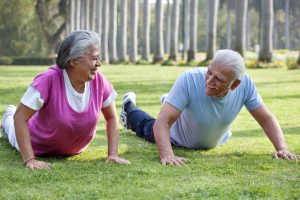 You’ve likely heard of a “runner’s high”, or the feeling of happiness you get after exercising. This effect is caused by the release of neurotransmitters called endorphins, which reduce pain and make you feel better overall. While it may be called a runner’s high, any form of exercise can produce this effect, so even if you don’t have the mobility or endurance to run you can still reap these rewards! Along with generally feeling good, this release of endorphins can also provide you with some relief from many chronic conditions. If you struggle with chronic pain, have a mental health disorder like depression or anxiety, or simply deal with a lot of stress, exercise can help. It can also lower the risks of developing issues such as dementia and can improve symptoms of cognitive decline.
Just as exercise can help little kids to tucker themselves out and get to sleep, it can also help if you are experiencing insomnia. According to the Journal of Clinical Sleep Medicine, insomnia is a common concern in older adults. In fact, as many as half of older adults will experience insomnia to some degree. Whether you struggle to fall asleep or stay asleep, exercising during the day can help you out during the night.
Exercise also doesn’t have to be a solo endeavour! Trying out new exercise classes or fitness facilities can provide a great opportunity to meet new people and build social connections. As an older adult, it may feel harder to get out of the house—whether that be from mobility issues, smaller social circles, or a simple lack of motivation—and so having a consistent way to get out and be active can do wonders. You might also use the opportunity to hang out with your current friends, to strengthen and maintain your connection. While there are many ways to stay social, the added benefits for your mind and body are great added benefits to get you, and your loved ones, out of the house together.
How to Stay Active
As mentioned above, you should be aiming to get at least 150 minutes of moderate-intensity activity per week. This level of activity should be around the same intensity as brisk walking, so there’s no need to be pouring sweat! In a Healthline article, one suggested method is to split this up across five days, with the other two days serving as rest and recovery periods. During your five active days, you can then aim to do just 30 minutes each day. These 30 minutes can also be split up—for example you could do two 15 minute sessions, one in the morning and one in the evening. Finding the right schedule for you is crucial for long-term sustainability, so don’t be afraid to mix things up depending on your schedule.
Also key is doing the right exercises. You should aim to do a combination of aerobic exercises (i.e. cardio) and muscle-strengthening exercises to get both endurance and strength benefits. Ideally, you should be doing 2 days of this strength training alongside the 150 minutes of moderate-intensity cardio. If you’re a busy person, or simply have a lot going on one week, you can also do some of these activities while doing something else, like calling with friends, or cut back slightly if needed. Consistency is more important than perfection, so don’t worry if you miss a day here and there.
Try Exercise Classes
While there are many ways to get your exercise in, a great way to start is by attending exercise classes. Places like community centers, pools, and gyms usually have a selection of classes targeted specifically at older adults, which you can use as a jumping-off point into the world of fitness. These classes will also often repeat on a weekly basis, making them an easy way to get a steady stream of exercise—you won’t have to worry about constantly scheduling activities, since the schedule will be laid out for you.
For those with high mobility, endurance, and strength, don’t be afraid to move your body in invigorating ways! Classes for pilates, dance, and weight training can help you to push yourself and break through physical and mental barriers. Still, be careful not to injure yourself—building intensity will take time, but it’s still possible to grow stronger as long as you are controlled and careful in your approach. If you’re looking for a more relaxed form of exercise, aquatic fitness (also known as aquafit) and seated exercise classes can get you moving without putting too much strain on your body.
Exercise shouldn’t always be about strength or endurance either. According to WebMD, stretching is vital to maintaining joint and muscle health in older adults, and should always be a part of your exercise routine. Before exercising, try doing some dynamic stretches—stretches that involve moving your body. After exercising, incorporating static stretches—where you hold your stretched position for a few seconds without moving—can help you to recover and prevent soreness. Exercise classes for things like yoga and tai chi can help you to maintain and improve your flexibility while also providing strengthening and endurance-building exercise.
Get Outdoors
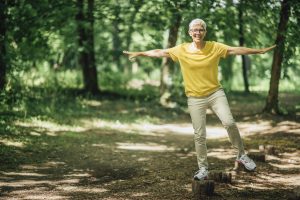 Whether you’re an outdoorsy person or not, being outside can have a significant positive effect on your health. In a review of research, the National Library of Medicine concluded that being outside in nature has a considerable positive impact on the overall wellbeing, mood, and quality of life of older adults. Even if you live in a large city, research has shown that any greenspace—even a small city park—can have this positive effect. So, if the weather permits, consider getting outside for a walk or cycle around your local green spaces. If you live near a forest or hiking trail, you could also make an afternoon of going out with friends or family to hike, have lunch, and catch up together.
In the winter, it can be harder to get outside and be active, both because of the weather and because of the shorter daylight hours. However, that’s not to say that it’s impossible! In fact, there are many ways to get outside during the winter. If you are feeling energetic, snowshoeing or skiing can get your blood pumping even on cold days—just remember to dress appropriately and stay safe outdoors. You can also take a walk along cleared city streets, which can be extra fun when Christmas decorations are out.
When the weather is warmer, you can also get exercise through day-to-day activities. For example, if you enjoy gardening, you can get a fair bit of upper body exercise through the process of lifting and lowering various pots and plants. Another example might be going to the beach; since walking on sand or uneven ground is harder than on city sidewalks, this can be a great way to improve lower body strength and balance.
Workout at Home
If you don’t feel like going outside, can’t get out because of the weather, or you just want to get a bit more exercise in a convenient, accessible way, at home workouts are a fantastic option. Many of the exercises—particularly those in seated workouts—can also be done while multitasking, making them easy to work into a busy schedule.
A huge number of guided workout videos exist on platforms like YouTube, where a simple search for “at home older adult workouts” or “seated exercises for older adults” can bring up thousands of options. Some of these may require equipment, such as dumbbells or resistance bands, but adding “no equipment” to your search will help to filter these out if you don’t want these kinds of videos. If you do have equipment like dumbbells, resistance bands, or an exercise ball, adding those words into your search will bring up videos specific to your equipment. Following a 15, 20, or 30 minute video can save you the hassle of trying to count repetitions or time your own movements, and can allow you to focus fully on your muscles to build your mind-body connection. You could even listen to an audiobook if you find yourself getting distracted!
If you are looking to improve flexibility, there are countless guided yoga practices online as well. Some may target the lower body, or upper body, or the core—it all depends on what you are looking for. By making sure to add in words like “older adult” or “beginner” to your search, you’ll be able to find easier ones to start with. From there, you can move on to trickier exercises as your strength progresses, or you can stay at the beginner level! It all depends on what you are comfortable with, and what your body’s limits are.
If you would rather put together your own workout routine, you can find many older adult-targeted exercises and routines online. Some examples of these include Healthline’s 6-minute strength routine, featuring exercises like wall pushups, toe taps, and heel raises, as well as the CDC’s recommendations of chair exercises, airplane stretches, and desk exercises. Try using a paper and pen or digital note-taking app to allocate certain exercises to certain days, and then tweak that routine to make it work for you.
Final Remarks
Through this article, our hope is that you have learned the importance of exercise for your physical, mental, and social health, as well as the many ways that you can begin exercising. Whether you attend a tai chi class, go for a hike with friends, or do some weight training from home, there are countless ways to get yourself moving in a safe, fun way.
As a final note, it is crucial that you remember that your body needs rest and recovery too. Stretching is one of the most important ways that you can increase the longevity and sustainability of your exercise habits, and therefore your overall quality of life, so make sure to always warm up and cool down after moving your body. Along with this, taking days to rest in between active days actually improves your ability to exercise. It may seem counterintuitive to take a day off, but science has proven that these rest days are vital for injury prevention, improving sleep, and reducing the chances of burnout.
Above all, remember to prioritize your long term health over short term gains. If you have not been very active in recent years, taking things slow to start will provide you with a stable base to build on in the future. Focusing too much on the intensity or duration of your exercises can lead to burnout or even injuries—which can be especially devastating for older adults. So, while it can be frustrating to not be able to do as much as you could when you were younger, coming to terms with your age and accepting your limits is the best thing you can do for your current and future health.