
Brenda Sharp
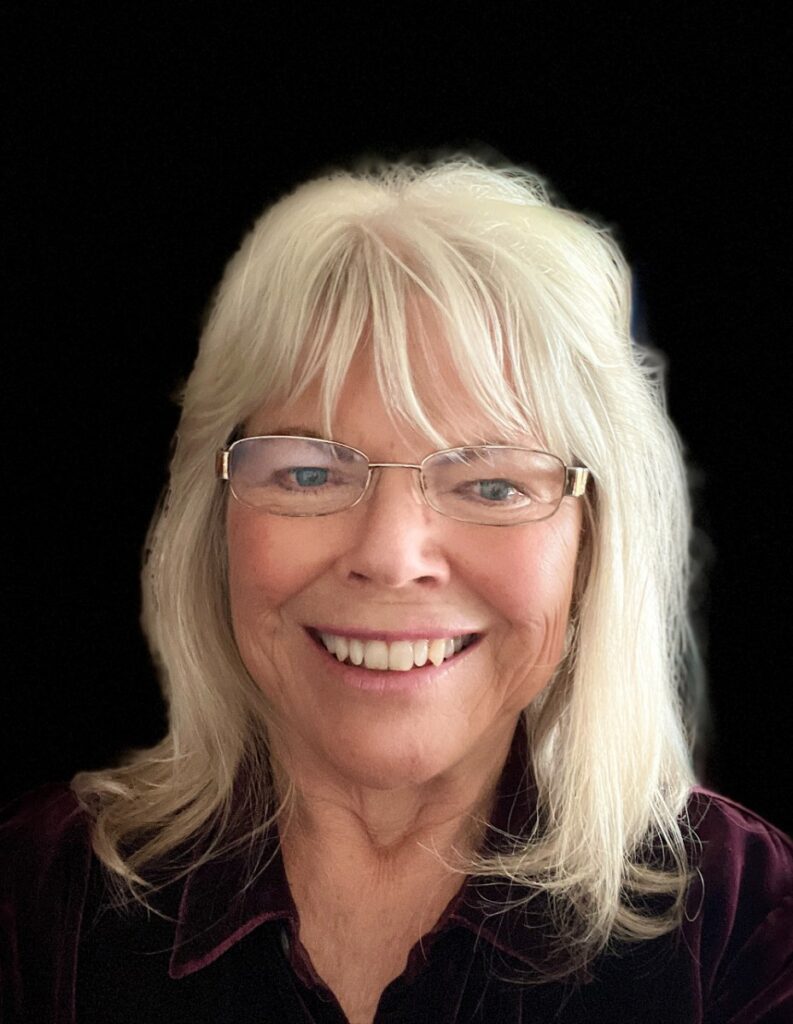
Psychologist
Brenda SharpPhD
PhD, Colorado State University, 1977
Licensed in: AL, AR, AZ, CO, CT, DC, DE, FL, GA, ID, IL, IN, KS, KY, MD, ME, MI, MN, MO, MS, MT, NC, ND, NE, NH, NJ, NV, OH, OK, PA, RI, SC, SD, TN, TX, UT, VA, VT, WA, WI, WV, WY · PSYPACT
Call and we’ll let you know if Brenda is taking new clients.
and most major plans








As an older adult myself, my own experience with aging has given me an up close and personal look at many of the challenges that come with it.
Q&A with Brenda
Getting to know Brenda
What do you enjoy most about working with older adults?
As an older adult myself, my own experience with aging has given me an up close and personal look at many of the challenges that come with it. As a result, while I have not walked on exactly the same path as my older clients, I experience a greater overlap now than there would have been with my younger self.
I feel that older adults have had a very broad range of life lessons and life experiences. Over the years they have usually gained a lot of understanding about people and the world, sometimes the hard way. I think they are more capable of growing in “wisdom”. There might be circumstances in their lives which put up roadblocks along this path. But by collaborating together to problem solve and using effective methods to improve coping with difficult feelings, problematic thinking, relationships or situations they might arrive at a more satisfying place. When we are able to work together to reduce and work through conflict, sadness or anxiety, I am gratified. I put my heart and mind into doing therapy so I care about what happens to the people with whom I work. In addition, I often learn a great deal from my older clients.
Why does online therapy work well for older adults?
Being able to talk to a therapist from the comfort and privacy of your own home has a number of advantages over leaving home and traveling to a therapist’s office: its wonderful to avoid having to drive in the snow or through traffic; many prefer the privacy and the comfort the home setting affords; and no-one minds saving the time when you eliminate the need to go out.
Many older people can no longer drive, or have health challenges such as COPD, Cardiac Problems, Macular Degeneration or Diabetes that often make mobility more difficult.
While it’s not a good fit for everyone, all of these factors as well as having a greater selection of therapists from which to choose so a good fit can be achieved, are likely responsible for the effectiveness of online therapy with older adults.
How do you approach therapy sessions?
Usually, I start out by asking what you have come in to see me about and what you would like to get out of the counseling? Or, “How would your life be different if the problem you are experiencing was resolved?” I want to know what you need from me. I will want to find out all I can about the problem or the situation, and get to know you and what you are experiencing. I want to really understand what you are going through and to work as a team to help you get to a better place.
Then I will try to gather a lot of information about your personal history and find out if there is an immediate crisis. In general, I will structure the first session by asking questions about biological and health related issues, relationship difficulties or psychological, behavioral and cultural issues that might be contributing to your present situation or feelings.
(If we haven’t discussed it previously and you want to know anything about me, I will tell you I have been a Psychologist for over 35 years and have experience working with people from diverse backgrounds and all age groups. Issues have included depression, loss and transitions; anxiety, stress and trauma; family, parenting, relationship, and occupational conflicts; existential issues, loss of a loved one, one’s identity, or sense of purpose.)
We collaborate to set goals for our work together.
And we talk about the best approach to take to gain the understanding and skills necessary to either change your response to the situation or resolve the problem to the extent possible.
Then we set to work. We begin to reduce the distress you feel, and learn skills to better regulate troublesome emotions or nonproductive thinking, and if applicable, to improve your relationships.
I will check on progress by administering a short questionnaire at regular intervals. We can revisit goals at any time if it is warranted. I view therapy as a creative partnership. Each person is unique, has a different situation and will benefit from a therapeutic approach that is tailored to their individual needs.
In general, I am Eclectic in my approach to therapy; that is, I try to adapt my approach to each person I work with depending on their problem, the goals we set together, their expectations and motivation. So for example, I might use a Desensitization approach with someone wanting to work on a phobia, but Cognitive Behavioral Therapy(CBT) to reduce more generalized anxiety. In the case of the former, we would focus on learning relaxation skills and work through a gradual exposure to the feared object or situation (from least anxiety provoking to more) so that a new calmer way of reacting to it could be achieved. In the case of CBT, the focus would be on helping you restructure your thoughts and change your behaviors. In turn, this results in corresponding changes in how you feel.
Other therapies I use include elements of Dialectical Behavior Therapy (DBT) and Acceptance and Commitment Therapy (ACT), and Positive Psychology which uses scientifically proven techniques to increase happiness or satisfaction. I also integrate Interpersonal, Mindfulness, Humanistic, Gestalt, brief Psychodynamic, and Jungian therapies, as well as Dynamic Hypnosis for Trauma treatment. Usually a course of therapy will involve two or three of these depending on the problem and the wishes of the client. I encourage questions and discussion so we can work effectively together.
What inspired you to become a therapist?
I have always been inspired by Ancient Proverbs and truths passed down through the ages. Something like old English Proverbs, “A smooth sea never made a skillful mariner” or “A stumble may prevent a fall” would encourage me to persevere if I was feeling upset or had made a mistake and felt regret or ashamed.
“We all walk in shoes too small” spoken by C G Jung caused me to wonder about what I was afraid to take on. “I have striven not to laugh at human actions, not to weep at them, nor to hate them, but to understand them” is a quote by Benedict de Spinoza (1632-1677), a Dutch Jewish Philosopher.
These quotes came a little later for me, but they reflect my early desire to understand how our biology and our minds work. It has always been in my nature to want to help people, and to understand my own problems and inner processes. And perhaps thats why I eventually chose Psychology as a profession.
I have discovered over the years that helping others to work through their problems, has helped me a great deal in the process.
“To understand is to be free.” It doesn’t change very difficult circumstances, but it’s often a first step towards getting unstuck from blaming yourself or others enabling you to find other productive and creative solutions.
What is your advice for someone starting therapy for the first time?
Therapy is an interactive process. You are the expert on YOU. You know more about you than anyone else, and I need your help throughout therapy, giving me feedback and asking me questions whenever they come up. So it’s good to approach your first session knowing that therapy is a collaboration, and that I don’t for one moment imagine that I have all the answers.
* Being in therapy is no longer stigmatized as something to be ashamed of. At it’s best it can often be a challenging, but productive growth experience that could influence the rest of your life in a positive way. Most often at it’s worst, you might not have been helped. You might benefit from reassessing your situation and either try working with a different therapist or figuring out if you in fact needed something else.
What do you wish people knew about therapy?
You benefit the most from therapy if you are an active participant. While you can definitely gain understanding and feel better just by sharing your story with a therapist, you gain the most if you continue on to do the work.
It is difficult to face your fears, do much of anything if you are depressed or to work on homework that examines your thoughts or feelings in order to change how you respond. So while therapy can be incredibly rewarding, it can also be challenging at times as we explore difficult emotions and experiences.
My role is to support you through this process.
Therapy is an interactive process. You are the expert on YOU.
A number of years ago, my husband and I went on an exploratory hunt to England and Ireland for ancestors who lived in the 1800’s and before. We just knew a few names and the villages we needed to find. The word passed down was that my grandfather’s parents and families had lived in a charming rural village community called Waltham St. Lawrence about 20 miles outside of London. We knew their estate was called Blaizes and it was one of about 50 similar places in a community that included a small, but very old, well kept up, beautiful little church built in Norman Architecture style, and a community owned (to this day), 14th Century, historic Ale House called The Bell. Strangers welcomed us like long lost friends and came to tell us at our table in the Bell that the Pastor had returned from lunch so we could go visit him at the church, now open and located just around the corner from the Ale House. We found many “Sharps” in the Cemetery around the church most of whom we were able to identify as ancestors. There were a few “Sharp” plaques on the walls of the church, there for one reason or another, and out in the courtyard, a very impressive 300 year old Yew tree. With a little guidance, we easily walked down the road a way and found the driveway leading to Blaizes. I rang the Intercom Bell at the gate and told them I was a descendant of the Sharp Family that once had resided there in the 1800’s. I asked if there just happened to be anyone there who would be willing to talk to us a bit? We were greeted by Malcolm, left in charge of the place while the present owners were in Palm Beach with their Polo ponies, presumably playing Polo at the Palm Beach Polo Club? He showed us around the grounds while at least 4 different dogs watched us from a window inside. The Sharps were long gone but nevertheless, it was a grand adventure and quite a chuckle.
Common questions
Frequently asked questions
Choose a topic. Can’t find your answer? Call our care team at 1-800-567-LIFE.
About Total Life
Who is the service for?
Our service is tailored for seniors looking to navigate the challenges of aging and aiming to make their golden years, golden.
What is the core purpose of your teletherapy service?
Our core purpose is to help as many seniors as possible access the mental health care they need, irrespective of their insurance coverage. We believe everyone deserves quality mental health care.
How is your service tailored to seniors?
Our platform is easy to use, with straightforward steps to connect you with a therapist. Additionally, our care team is always ready to assist you from start to finish.
How can teletherapy help me feel like the best version of myself?
Teletherapy provides a supportive environment to explore and address concerns, helping you work through challenges and promoting mental well-being.
How is your service different from conventional therapy?
Unlike conventional therapy, we provide access to therapy through Original Medicare coverage. Our care team facilitates a smooth process from the initial call all the way through ongoing care.
Insurance & coverage
Are your teletherapy services covered by Original Medicare?
Yes, our services are accessible through Original Medicare coverage, making mental health care more accessible for seniors.
Do you accept insurance plans other than Original Medicare?
Yes, we accept select Medicare Advantage (MA) plans. Please contact our care team to verify if your specific plan is accepted.
How do I pay for my sessions?
Payment can be made through various methods including Original Medicare coverage. Our care team can provide more detailed information based on your specific situation.
Is there a limit to the number of sessions I can have?
Original Medicare has an uncapped session limit; the number of sessions will be determined based on your individual needs and treatment plan.
What is a Superbill and how can it benefit me?
A Superbill is an itemized form that details the services you have received from us. It provides all the information needed to submit a claim to your insurance for out-of-network reimbursement.
If I have out-of-network benefits, how does the reimbursement process work?
If you have out-of-network benefits, you can submit the Superbill we provide to your insurance company for reimbursement. The reimbursement rate and process depend on your plan.
How do I obtain a Superbill for my sessions?
After each session, we can provide you with a Superbill. Our care team will assist you in generating a Superbill for your records.
Therapists & sessions
How experienced are your providers in working with older adults?
Our providers are hired specifically for their experience with older adults. They are trained and equipped to understand and address the unique mental health needs of seniors.
Can I choose my therapist?
We make every effort to match you with a therapist who has the right experience and expertise for your needs. If you have a preference, we’ll do our best to accommodate it.
What if I don’t feel a connection with my therapist?
It’s important to have a good rapport with your therapist. If for any reason you wish to change therapists, just let us know and we’ll facilitate a switch.
How is progress measured in teletherapy?
Progress is measured through regular reviews and discussions between you and your therapist, ensuring that the therapy is effective and meeting your needs.
Getting started
How quickly can I start with my therapy sessions?
Our care team is dedicated to facilitating a quick and easy process from your first phone call to setting up a therapy session on the same call.
How do I schedule a teletherapy session?
Scheduling a session is simple. Just give us a call at 1-800-567-LIFE and our care team will assist you in setting up a session on the first call itself.
Do I need any special equipment for teletherapy?
All you need is a computer, tablet, or smartphone with a camera and microphone, and a reliable internet connection. Phone-only sessions are also available.
What if I need to cancel or reschedule my appointment?
We have a flexible cancellation and rescheduling policy. Just contact our care team and they will assist you with the necessary changes.