
How to Help Aging Parents With Spring Cleaning Without Stress
There’s something about spring that makes us want to open the windows, shake off the dust, and hit reset. Across cultures, spring cleaning has long symbolized a fresh start—a chance to tidy up, reorganize, and bring new energy into our homes.
But while the urge to clean and declutter might come naturally, the task itself can feel overwhelming—especially for aging parents. Even those who are relatively independent might find certain chores more difficult than they used to, whether it’s lifting heavy boxes, sorting through decades of belongings, or tackling high shelves and hard-to-reach corners.
If you’re wondering how to support your parents through this seasonal refresh without stress (for them or for you), you’re in the right place. This guide offers practical, thoughtful ways to help them enjoy the benefits of a clean and organized home—at a pace and plan that works for everyone. Let’s dive in.
Start with a Conversation
Before you jump into cleaning your parents’ home, you should sit down to have a conversation with them about what needs to be done, and who is going to take care of which task. It’s easy to step on each others’ toes and get into arguments if you don’t have a plan, so take the time to sit down with them to find out what their priorities are. And, once you’ve heard them make sure to be respectful of them. Sure, you might not care as much about going through every item stashed in the attic, but if that is what is most important to them then that needs to be prioritized. Of course, it’s important to make sure the house is generally clean for safety, such as taking care of dust and mold, and making sure there aren’t items cluttering the floor for them to trip over. However, if you think they should focus on landscaping and they don’t care about that you should probably ask yourself if they’re overgrown raspberry patch is really hurting anyone? If the answer is no then try to let it go.
Once you have listed all of their wants for spring cleaning, you can add on any musts, such as general cleaning, and getting rid of items that are taking up excess space in the house. This is also your opportunity to suggest tasks that you think are important, just remember to drop it if your parents are not interested and it’s not of major concern.
From there, make sure everyone knows what they’re taking care of during this spring clean. This is a great opportunity to make sure everyone is taking care of something that means something to them or that they are best suited for. Don’t take on mending the garden fence if you’ve never picked up a hammer before! And don’t offer to organize the donation bin if you know your dad is very particular about certain belongings. However, it’s important that you…
Start Small
Unless your parents live in a tiny house, it’s unlikely that all of their spring cleaning will be finished in a day, so it’s best to start with just one room or one project to begin. This is where the earlier step of prioritizing comes in handy. Something like decluttering is a good place to start, as it will immediately make the home a more enjoyable one to live in, will make it easier to do things like vacuum and dust, and will also help prevent falls and fires. To make decluttering easier, start with just one room at a time.
There are countless articles, books, podcasts and TV shows that give advice on how to declutter. You might try the Marie Kondo method of figuring out what “sparks joy” in your life, and letting go of all the items that don’t. You might follow the idea of letting go of “just in case” items, as outlined here on The Minimalists.
Other popular methods involve making ‘donation’ and ‘keep’ piles, commiting to filling a garbage bag, getting rid of anything that hasn’t been used in the last 90 days and so on and so on and so on.
The right way to declutter is whatever way feels best for you. And if this is a particularly difficult task for you and your parents then don’t feel like you have to struggle through it alone! There are countless decluttering experts out there who can come in to help you declutter in an efficient way. This might be particularly helpful if your parent is struggling with grief, as you might want to bring someone who is specifically trained to handle cleaning that is coupled with such a difficult emotion. This is also a great time to mention:
Professional Help
Why should you and your parents have to handle all of this spring cleaning on your own! Whether you’re looking for some help decluttering, regrouting the bathroom tiles, or fixing up the garden shed, there is bound to be someone who is right for the job you need done!
Of course money is often a concern, but sometimes this might need to be weighed against the costs that are already inevitable. If your parents need their carpets cleaned then you’ll already have to cover the cost of a carpet cleaning machine that might be difficult to maneuver and will already come with a high rental cost. Depending on how long the job takes to do, hiring a professional might not be all that different from renting a machine that might just give you a headache.
There also might be certain areas of the house, such as a stove or fridge, that might require special cleaning products and techniques that you might not be able to take care of with your busy schedule, and having someone come in who knows how to take care of those tasks can alleviate a lot of stress.
Of course, if you are getting someone to come in to do a specific task make sure you have specifically communicated with them about that activity. Most cleaners have different costs associated with different kinds of cleaning and you want to make sure you’re in agreement about what tasks are going to be completed for which costs.
There are often cleaning services that are specifically geared towards the homes of older adults, so reach out to a local community center to see if you can be connected to some of those resources.
Update Cleaning Products
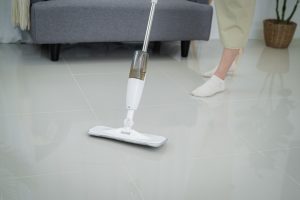 Your parents might still be perfectly independent, but they might be dealing with stiff joints that make reaching, bending over or standing for long periods of time uncomfortable. So, take their abilities into consideration when planning this clean.
What tasks can be done sitting? For example, they could sort through drawers or boxes while seated, which can help them to still be involved in the cleaning but in a way that’s more comfortable to them.
You might also consider updating their cleaning products. If reaching is difficult, then why not get them an extendable duster? That way they’re not having to reach into awkward corners or risking a fall by standing on a stool to reach the ceiling. Home Instead offers some other ideas for good products like getting a lightweight or robot vacuum, and installing a dishwasher.
You might also want to think about the kind of products that are in your parents’ home. While products like bleach or other strong cleaning products can be very useful, you want to be sure that your parents aren’t at risk of accidentally misusing any products (for example forgetting that bleach shouldn’t be mixed with vinegar and accidentally combining the two and putting their health at risk). If you have any concerns about cognitive decline in your parents then you might want to have a conversation with them about switching offer to more natural products and saving anything stronger for when you or a professional cleaner is in the house.
Make Cleaning Fun
Just because you’re cleaning doesn’t mean you can’t enjoy yourself! If you’re doing something tedious or unpleasant then it’s a lot more likely that stress and tension will build up and overflow. But, if you make spring cleaning into an enjoyable activity for everyone then the stress will magically fade away, and spring cleaning might actually turn into an event that everyone looks forward to!
Here are a few ideas for how you can level up your spring cleaning:
- Pump those tunes. Make a groovy playlist that everyone can listen to to inspire their cleaning. If you know what everyone enjoys then you can make a playlist, or you can ask everyone to tell you three songs that they enjoy and add it to the list. This means everyone will have something to look forward to and you never know, you might be introduced to some amazing new music!
- Podcasts. Spring cleaning is the perfect time to binge that new true crime podcast. You can even make it into a game where everyone gets to make a prediction on what is going to happen next.
- Prizes. Who doesn’t love a prize? Whoever cleans their room the best/fastest/whatever you’d like gets a prize!
- Schedule frequent breaks. Decide on how often it is useful for everyone to take breaks. This might be every 20 minutes or every 2 hours!
- Take time together at the end of the day. Order some pizza, have a cup of tea or a beer and enjoy this time together in appreciation of a job well done.
Humans like having things to look forward to, so if cleaning is looked at like something that will bring them joy, then it’ll be a lot easier to get it done!
Offer to Do Those Annoying Tasks
 Yes, you are already being kind by providing help to your parents, so it might be tempting to go with the easiest tasks. But, if you really are keen to help, and you want to do it with the least amount of stress possible, then why not just offer to do the jobs that nobody else really wants to do? It’ll take stress off of your parents and honestly will only be a couple of hours out of your day. And, at the end of you can feel really good about helping them to do something they needed.
Hot tip: What is considered annoying to you might not be annoying to your parents. You might hate vacuuming but your mom doesn’t mind it at all, so be sure to check in before volunteering to do something that won’t make a difference to them either way.
Let It Go
There may be some things that you think your parents should take care of, such as repainting their kitchen or washing all of their curtains. And, while those might be things that would make their house look nice, it’s important to remember the advice from the beginning of this piece – is it a safety issue? If not, does it really matter?
How you run your house is going to be different to how your parents run theirs, and it’s important for you to accept that. You can repaint your own kitchen, but, unless there’s a valid reason, aside from your personal preference, for your parents to do so, just let it go. It won’t be worth the stress on you and your parents’ relationship.
Instead, when thinking about cleaning think about these things:
- Safety. Focus on keeping things free of dust, mold, mildew, tripping and fire hazards.
- Enjoyment. What makes your parents happy? What matters to them?
Once you’ve covered those two items, maybe they’ll be a few extra things you’ll add on. Maybe washing those curtains isn’t actually such a big deal – and they’ll look a lot nicer, too! But, the second those things do become a big deal make like Elsa from Frozen and just let it go.
With these tips hopefully spring cleaning with your aging parents becomes an easy and perhaps even an enjoyable activity that you can move through with ease. After all, it’s always a bit easier to smile when the sun is shining!
Spring Forward: 5 Refreshing Ways to Embrace the New Season
With winter drawing to a close, now is the perfect time to start getting ready for spring. At this time of year, there’s plenty to get excited for, especially in your golden years. Since winter can be especially challenging as an older adult—with increased fall risks, shorter daylight hours, and less opportunities to socialize—the warmer season can really help to get that “spring” back in your step.
Depending on your hobbies, interests, and overall lifestyle, spring will mean different things to you. Perhaps you’re getting ready to plant this year’s crops in your garden, or planning your next traveling adventure… Perhaps you have no ideas at all! If you’re looking for some inspiration, our hope is that the rest of this article will help you to get this next season started off on the right foot.
1. Observe Nature’s Revival
Some of the most beautiful and subtle signs of spring can be found in nature. As the temperatures warm and the days grow longer, the Earth begins to wake up from its winter slumber. This process can be seen in many different places—from the ground and trees to the rivers and lakes, nature is teeming with life at this time of year—and there are also many different ways to go about appreciating these seasonal changes.
One of the most accessible of these is to take a mindful walk outdoors. This will mean different things to different people, as factors such as mobility, endurance level, and overall fitness can make taking walks easier or harder. If you have a high degree of mobility, you can try taking longer walks along routes with plenty of nature, like hiking trails and parks. For those with moderate mobility, you can walk along smoother pathways like sidewalks and city streets, and take note of any flowers, bushes, and trees that you see along the way. And if walking is more difficult for you, sitting outdoors on your porch or sitting by a window to observe the outdoors can help you to embrace springtime from the comfort of your home. If you do head outdoors, just be sure to dress appropriately; the weather can fluctuate a lot at this time of year, so dressing in easily removable layers is your best bet.
Once you’re outside (or by a window), take some time to look for signs of spring. Some of these signs, like vibrant flowers, are easy to pick out, while others may be more subtle. The key is to be mindful and patient during this process. There’s no need to rush this. As you walk, take the time to slow down and smell the flowers, watch birds, and feel the warmth of the sun on your face. Just remember to wear sunscreen!
Getting outside also has many proven health benefits, from better sleep quality to improved mental wellbeing. According to the National Library of Medicine, exposure to greenspace has also been linked with reduced risks of depression and anxiety, two mental health issues common in older adults. Whichever way you slice it, embracing the changing seasons by getting outdoors is excellent for your health.
2. Get Organized
As spring falls at the beginning of the year, it’s a great time to start getting organized for the rest of the year. A popular way to do this is by doing some spring cleaning, but you can also use this time to make plans for the year ahead.
While spring cleaning is very helpful for rejuvenating your home and improving your health, it can be a daunting process, especially if your home is quite cluttered. To declutter effectively, it’s best to start with items that aren’t very sentimental (like clothes, or books) and then move on to progressively more challenging items. According to Marie Kondo, a decluttering expert, following the order of clothes, books, papers, miscellaneous items, and finally sentimental items is best. This order allows you to progressively train yourself to get better at letting go of items, making it feel less stressful by the time you get to items with lots of memories attached.
Another important thing to note is that spring cleaning likely won’t be over in a few hours, or even a few days. While surface level cleaning can usually be done quickly, doing a proper deep clean will take time and energy. Set yourself some realistic goals, and don’t be hard on yourself for not being able to “get it done quickly enough.” These things take time! Instead, try to treat cleaning as a hobby, and use small chunks of time out of each week to tackle things one small step at a time.
Getting organized can also mean making plans for the coming months. If you’re a gardener, or would like to start gardening, early spring is a great time to start planning and get a head start on the gardening season. Even before the ground is workable, you can start planning out which crops to grow where, and when. Then, once it’s warm enough out, you can start the process of getting your soil ready. If you have outdoor flower beds or growing plots, now is a great time to clean those up, remove any dead branches and leaves, and work some compost into your soil. If you plant in pots, you can also start getting those ready. By doing this ahead of time, you’ll be able to sow early seeds without delay, leading to a longer and more productive growing season.
Other ways to get organized include planning out travel and vacations, looking into upcoming events in your area, and choosing new clubs or sports to try out. For example, if you’ve been meaning to pursue a new hobby, now is a perfect time to start.
3. Embrace Creativity
 Speaking of new hobbies, springtime is an amazing time of year to get back in touch with your creative side. Sources of inspiration are everywhere—as mentioned earlier in this article, the Earth begins to wake back up during the spring, which subsequently creates a wide range of potential subjects to study and draw inspiration from.
If you find it hard to slow down and appreciate nature’s signs of spring while on walks, recording your findings can help, as you’ll need to pause and reflect more often. If you’re into photography, try taking a camera—film, digital, polaroid, your phone, etc—to capture your favourite moments. If instead you prefer to draw, try bringing a small sketchbook with you on a walk, or pick a spot to sit and draw or paint a specific subject. If you do pick a specific spot, you can also make a series of paintings of that location to document the changes you see over time. Even just taking a few minutes to journal about your favourite findings from a walk can help you to feel more in tune with spring.
Crafting indoors with seasonal materials is another fantastic option, especially if you aren’t able to get outdoors for long periods of time. Crafts such as pressing fresh flowers, creating paper flower garlands, and decorating easter eggs can be done alone, or with others—you could even make an event of this! If you have family and friends who live nearby, try inviting them over for a crafting day, or join a local crafting event; many events targeted at older adults can be found online on sites like Meetup and Facebook, or through local community bulletins. If there isn’t an event in your area you could even host one yourself at a local community center, or create a club to make a crafting session into a recurring event.
If you aren’t feeling very inspired, searching online on sites like Pinterest can bring up tons of potential craft ideas. By using common search phrases like “simple spring crafts for adults,” you’ll be able to find a wide range of options—from there, you can refine your search by adding words like “pressed flower” or “lantern” to your search to narrow it down to only the ones you’re most interested in.
4. Give Back to Your Community and Loved Ones
If crafting isn’t really your thing but you still want to hang out with friends and family, there are many other ways to gather together. For example, you could do a seasonal activity together, like birdwatching or having a picnic, or an all-season activity like learning a new language, cooking a new dish, or playing a computer game. In fact, as per the National Institute on Aging, learning new things has been linked to improved cognitive health in older adults, making it a great activity regardless of the season.
Generosity is also always in season. Giving back to your community, your neighbours, and even random strangers on the street can brighten up not only their day, but yours as well. According to the National Library of Medicine, being generous has been directly linked to increased levels of happiness, meaning that even if your impact is small, you’ll still be doing a whole lot of good for yourself. Being generous comes in many different forms, too, so it’s easy to adapt it to fit your abilities and needs. One way to show generosity is to spend some time making goods and foods for those in need. For example, a simple care package with things like canned foods (with pull tabs, as they may not have can openers) or gift cards, warm socks or hats, and hygiene products like toothpaste and soap can go a long way for someone experiencing homelessness.
If approaching people on the street is a bit intimidating, you can also try setting up a Little Free Library, helping neighbours, or creating letter boxes for anyone who needs a little boost. To do this, simply write short motivational notes and place them in easily accessible areas—like on your fence, or inside of a little library. You can write messages on the outside of your envelopes to make it clear that they are free to take; some examples include “to someone who needs a confidence boost,” “for somebody experiencing grief or loss” and “open this if you’re feeling low!” If you’ve gone through difficult times in the past, drawing from these experiences and giving advice to others in similar situations can help them to feel less alone, and also help you to process and move past these experiences.
Beyond doing individual community work, volunteering at local organizations allows you to help out in a more structured way. Shelters, litter clearing groups, library programs, food banks, and other community organizations are all great options, as they often include volunteer options for older adults. If you’re unsure of whether an organization has volunteer positions open, consider checking their website, social media—on platforms such as Facebook—or inquire in person by going to their physical branch.
5. Take Care of Yourself
 Chances are that you’ve heard the saying “you can’t pour from an empty cup,” and for good reason—it’s sound advice! When looking for ways to appreciate the changing seasons, your natural instinct might be to try to do as many activities as possible. While this can be great for socializing and getting yourself out of the house, sometimes it’s in your best interest to slow down and dig deep into what you truly need. With winter being a particularly hard season for many, this is more important than ever.
As the weather becomes milder, you’re likely to notice an increase in energy; the warmer temperatures and longer daylight hours give many people an extra boost, which might mean that you find yourself more motivated to get up and moving. This is great news! As per the CDC, exercise is a key component in a long and healthy life, with health benefits including decreased risks of heart attacks, strokes, diabetes, and even some forms of cancer. Exercising in a way that feels good for you—whether that be walking outdoors to enjoy the weather, doing exercises at home, or taking exercise or dance classes—is an excellent way to embrace your extra spring energy.
If you’re exercising more, chances are that you’ll need to increase your daily water intake an maintain a good diet, too. Alongside eating nutrient dense whole foods such as whole grains, vegetables, eggs, lean meats, and legumes, you should also take care to eat a diet rich in protein. As an older adult, your muscles naturally diminish, which can lead to decreased strength and mobility; eating enough protein can help to maintain your muscle mass. This doesn’t—and shouldn’t—have to be something that happens overnight. Instead of trying to dramatically overhaul your diet in one go, focus on making meaningful changes in small, gradual steps. For example, you could try to incorporate one extra vegetable into your dinners, or focus on eating one healthy meal per week. Once you have gotten comfortable with your first change, you can move on to another. Before you know it, you’ll be building some fantastic healthy habits.
You can also develop healthy habits for your mind. Things like meditation and journaling are great tools to have in your self-care kit, especially in spring. Many people, old and young, can find themselves feeling low after winter. Early spring is therefore a great time to do some self reflection to notice which areas of your life may need a bit of extra love. Luckily, meditation and journaling are both readily accessible. To start meditating, you only need to focus on your breathing—YouTube also has many lovely guided meditations for beginners—and journaling only requires a simple pen and paper. If you find yourself intimidated by the blank page, you can start out by simply recapping your day, or by writing a list of 10, 5, or even 1 thing that you are grateful for today. As with any other habit, starting small will yield the best results. Don’t force it! Go with what feels best for you.